20 Mar 20264 Min Read
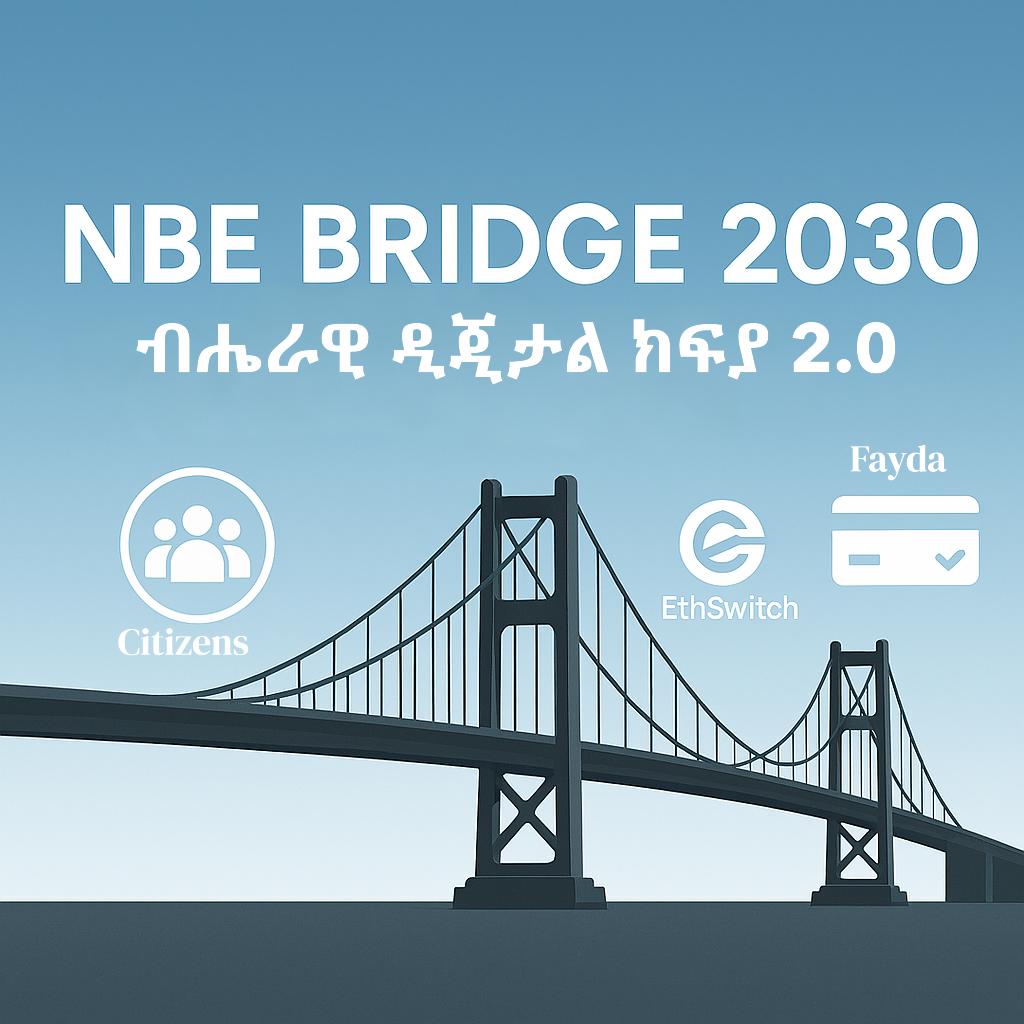
NBE BRIDGE 2030 NDPS 2.0
የብሔራዊ ዲጂታል ክፍያ ስትራቴጂ 2.0 ትንተና
Strategic Review: NBE BRIDGE 2030 & NDPS
2.0
Focus: Shifting the Paradigm from "Access" to "Usage"
The National Bank of Ethiopia (NBE) has transitioned into a critical phase of its digital transformation journey through the National Digital Payments Strategy (NDPS) 2023–2030, integrated within the broader BRIDGE 2030 strategic framework. This evolution marks a shift from merely providing financial infrastructure (Access) to ensuring that digital tools become the primary mode of transaction (Usage).
1. Key Objectives of NDPS
2.0
While NDPS
1.0 focused on building the foundations (connectivity and basic account ownership), NDPS
2.0 aims to deepen the digital ecosystem through:
Merchant Payment Adoption: Incentivizing small and medium enterprises (SMEs) to accept digital payments instead of cash.
G2P and P2G Digitalization: Ensuring all governmenttoperson (social transfers) and persontogovernment (taxes/fees) transactions are 100% digital.
Universal Digital ID Integration: Leveraging the Fayda ID to streamline Know Your Customer (KYC) processes, reducing barriers to entry.
Regulatory Innovation: Utilizing the NBE Regulatory Sandbox to allow Fintechs to test innovative products in a controlled environment.
2. The Mandate: Usage Over Access
The strategic "Bridge 2030" acknowledges that while over 45% of Ethiopians may have a bank or mobile money account, a large portion of these accounts remains dormant.
The Goal: To move beyond "Account Opening" metrics and focus on "Transaction Frequency."
Mechanism: Creating a "CashLite" economy by making digital payments faster, cheaper, and more reliable than physical cash.
3. Interoperability and System Integration
The success of NDPS
2.0 hinges on the seamless interconnection of diverse payment systems:
EthSwitch’s Expanded Role: Moving beyond ATM/POS switching to realtime retail payments (Instant Transfers) between different banks and mobile money providers (e.g., Telebirr, MPesa, and CBE Birr).
Open API Standards: Mandating banks to open their systems to thirdparty developers to foster a competitive Fintech landscape.
CrossBorder Integration: Aligning domestic payment rails with regional systems (like PAPSS) to facilitate trade within the AfCFTA framework.
2.0
Focus: Shifting the Paradigm from "Access" to "Usage"
The National Bank of Ethiopia (NBE) has transitioned into a critical phase of its digital transformation journey through the National Digital Payments Strategy (NDPS) 2023–2030, integrated within the broader BRIDGE 2030 strategic framework. This evolution marks a shift from merely providing financial infrastructure (Access) to ensuring that digital tools become the primary mode of transaction (Usage).
1. Key Objectives of NDPS
2.0
While NDPS
1.0 focused on building the foundations (connectivity and basic account ownership), NDPS
2.0 aims to deepen the digital ecosystem through:
Merchant Payment Adoption: Incentivizing small and medium enterprises (SMEs) to accept digital payments instead of cash.
G2P and P2G Digitalization: Ensuring all governmenttoperson (social transfers) and persontogovernment (taxes/fees) transactions are 100% digital.
Universal Digital ID Integration: Leveraging the Fayda ID to streamline Know Your Customer (KYC) processes, reducing barriers to entry.
Regulatory Innovation: Utilizing the NBE Regulatory Sandbox to allow Fintechs to test innovative products in a controlled environment.
2. The Mandate: Usage Over Access
The strategic "Bridge 2030" acknowledges that while over 45% of Ethiopians may have a bank or mobile money account, a large portion of these accounts remains dormant.
The Goal: To move beyond "Account Opening" metrics and focus on "Transaction Frequency."
Mechanism: Creating a "CashLite" economy by making digital payments faster, cheaper, and more reliable than physical cash.
3. Interoperability and System Integration
The success of NDPS
2.0 hinges on the seamless interconnection of diverse payment systems:
EthSwitch’s Expanded Role: Moving beyond ATM/POS switching to realtime retail payments (Instant Transfers) between different banks and mobile money providers (e.g., Telebirr, MPesa, and CBE Birr).
Open API Standards: Mandating banks to open their systems to thirdparty developers to foster a competitive Fintech landscape.
CrossBorder Integration: Aligning domestic payment rails with regional systems (like PAPSS) to facilitate trade within the AfCFTA framework.
የብሔራዊ ዲጂታል ክፍያ ስትራቴጂ 2.0 ትንተና
ስልታዊ ትንተና፡ የኢትዮጵያ ብሔራዊ ባንክ BRIDGE 2030 እና NDPS
2.0
ትኩረት፡ ከመዳረሻ (Access) ወደ ተግባራዊ አጠቃቀም (Usage) የሚደረግ ሽግግር
የኢትዮጵያ ብሔራዊ ባንክ የፋይናንስ ዘርፉን ለማዘመን የቀረጸው ብሔራዊ ዲጂታል ክፍያ ስትራቴጂ (NDPS
2.0) እና BRIDGE 2030 ስልታዊ እቅድ፤ የሀገሪቱን የዲጂታል ምህዳር ወደ አዲስ ምዕራፍ የሚያሸጋግር ነው። የዚህ ስትራቴጂ ዋነኛ ግብ የክፍያ አማራጮችን ለዜጎች ማቅረብ ብቻ ሳይሆን፣ ዲጂታል ክፍያን የዕለት ተዕለት የግብይት ባህል ማድረግ ነው።
1. የNDPS
2.0 ዋና ዋና ዓላማዎች
ስትራቴጂው በዋናነት በሚከተሉት ነጥቦች ላይ ያተኩራል፦
የነጋዴዎች ክፍያን ማዘመን (Merchant Payments)፦ አነስተኛ እና መካከለኛ ነጋዴዎች ከጥሬ ገንዘብ ይልቅ በዲጂታል አማራጮች ክፍያ እንዲቀበሉ ማበረታታት።
የመንግሥት ክፍያዎችን ወደ ዲጂታል መቀየር፦ መንግሥት ለዜጎች የሚከፍላቸው (G2P) እና ዜጎች ለመንግሥት የሚከፍሏቸው (P2G) እንደ ታክስ እና የአገልግሎት ክፍያዎች ሙሉ በሙሉ በዲጂታል እንዲሆኑ ማድረግ።
የዲጂታል መታወቂያ (Fayda) ትስስር፦ የፋይዳ መታወቂያን በመጠቀም የደንበኞችን ማንነት የማረጋገጥ (KYC) ሂደት ማቀላጠፍ።
2. አጠቃቀም ላይ ያተኮረ ትዕዛዝ (Usage Over Access)
ባለፉት ዓመታት የባንክ ሒሳብ ቁጥር ያላቸው ሰዎች ቁጥር ቢጨምርም፣ አብዛኛው ግብይት አሁንም በጥሬ ገንዘብ ይከናወናል።
ዋናው ግብ፦ ትኩረቱን የባንክ አካውንት ካላቸው ሰዎች ቁጥር ይልቅ፣ "በየቀኑ በዲጂታል የሚገበያዩ ሰዎች ቁጥር" ላይ ማድረግ።
ውጤቱ፦ የጥሬ ገንዘብ ዝውውርን በመቀነስ (CashLite Economy) የፋይናንስ ሥርዓቱን ግልጽነት እና ፍጥነት መጨመር።
3. የክፍያ ሥርዓቶች ትስስር (Interoperability)
የNDPS
2.0 ስኬት የሚወሰነው የተለያዩ የክፍያ ሥርዓቶች እርስ በእርስ መናበብ ሲችሉ ነው፦
የኢትስዊች (EthSwitch) ሚና፦ ባንኮች፣ የሞባይል ገንዘብ አገልግሎቶች (እንደ ቴሌብር፣ ኤምፔሳ) እና ማይክሮ ፋይናንሶች ያለምንም እንቅፋት ገንዘብ እንዲለዋወጡ ማስቻል።
ክፍት የቴክኖሎጂ ሥርዓት (Open API)፦ የፋይናንስ ተቋማት የቴክኖሎጂ መሰረታቸውን ለፈጠራ ስራዎች (Fintechs) ክፍት በማድረግ አዳዲስ የክፍያ መተግበሪያዎች እንዲበራከቱ ማድረግ።
ቀጣናዊ ትስስር፦ የኢትዮጵያን የክፍያ ሥርዓት ከአህጉራዊ የክፍያ መድረኮች ጋር በማገናኘት ድንበር ተሻጋሪ ንግድን ማሳለጥ።
Full Read
2.0
ትኩረት፡ ከመዳረሻ (Access) ወደ ተግባራዊ አጠቃቀም (Usage) የሚደረግ ሽግግር
የኢትዮጵያ ብሔራዊ ባንክ የፋይናንስ ዘርፉን ለማዘመን የቀረጸው ብሔራዊ ዲጂታል ክፍያ ስትራቴጂ (NDPS
2.0) እና BRIDGE 2030 ስልታዊ እቅድ፤ የሀገሪቱን የዲጂታል ምህዳር ወደ አዲስ ምዕራፍ የሚያሸጋግር ነው። የዚህ ስትራቴጂ ዋነኛ ግብ የክፍያ አማራጮችን ለዜጎች ማቅረብ ብቻ ሳይሆን፣ ዲጂታል ክፍያን የዕለት ተዕለት የግብይት ባህል ማድረግ ነው።
1. የNDPS
2.0 ዋና ዋና ዓላማዎች
ስትራቴጂው በዋናነት በሚከተሉት ነጥቦች ላይ ያተኩራል፦
የነጋዴዎች ክፍያን ማዘመን (Merchant Payments)፦ አነስተኛ እና መካከለኛ ነጋዴዎች ከጥሬ ገንዘብ ይልቅ በዲጂታል አማራጮች ክፍያ እንዲቀበሉ ማበረታታት።
የመንግሥት ክፍያዎችን ወደ ዲጂታል መቀየር፦ መንግሥት ለዜጎች የሚከፍላቸው (G2P) እና ዜጎች ለመንግሥት የሚከፍሏቸው (P2G) እንደ ታክስ እና የአገልግሎት ክፍያዎች ሙሉ በሙሉ በዲጂታል እንዲሆኑ ማድረግ።
የዲጂታል መታወቂያ (Fayda) ትስስር፦ የፋይዳ መታወቂያን በመጠቀም የደንበኞችን ማንነት የማረጋገጥ (KYC) ሂደት ማቀላጠፍ።
2. አጠቃቀም ላይ ያተኮረ ትዕዛዝ (Usage Over Access)
ባለፉት ዓመታት የባንክ ሒሳብ ቁጥር ያላቸው ሰዎች ቁጥር ቢጨምርም፣ አብዛኛው ግብይት አሁንም በጥሬ ገንዘብ ይከናወናል።
ዋናው ግብ፦ ትኩረቱን የባንክ አካውንት ካላቸው ሰዎች ቁጥር ይልቅ፣ "በየቀኑ በዲጂታል የሚገበያዩ ሰዎች ቁጥር" ላይ ማድረግ።
ውጤቱ፦ የጥሬ ገንዘብ ዝውውርን በመቀነስ (CashLite Economy) የፋይናንስ ሥርዓቱን ግልጽነት እና ፍጥነት መጨመር።
3. የክፍያ ሥርዓቶች ትስስር (Interoperability)
የNDPS
2.0 ስኬት የሚወሰነው የተለያዩ የክፍያ ሥርዓቶች እርስ በእርስ መናበብ ሲችሉ ነው፦
የኢትስዊች (EthSwitch) ሚና፦ ባንኮች፣ የሞባይል ገንዘብ አገልግሎቶች (እንደ ቴሌብር፣ ኤምፔሳ) እና ማይክሮ ፋይናንሶች ያለምንም እንቅፋት ገንዘብ እንዲለዋወጡ ማስቻል።
ክፍት የቴክኖሎጂ ሥርዓት (Open API)፦ የፋይናንስ ተቋማት የቴክኖሎጂ መሰረታቸውን ለፈጠራ ስራዎች (Fintechs) ክፍት በማድረግ አዳዲስ የክፍያ መተግበሪያዎች እንዲበራከቱ ማድረግ።
ቀጣናዊ ትስስር፦ የኢትዮጵያን የክፍያ ሥርዓት ከአህጉራዊ የክፍያ መድረኮች ጋር በማገናኘት ድንበር ተሻጋሪ ንግድን ማሳለጥ።
© 2026 TIMONA Intelligence Hub